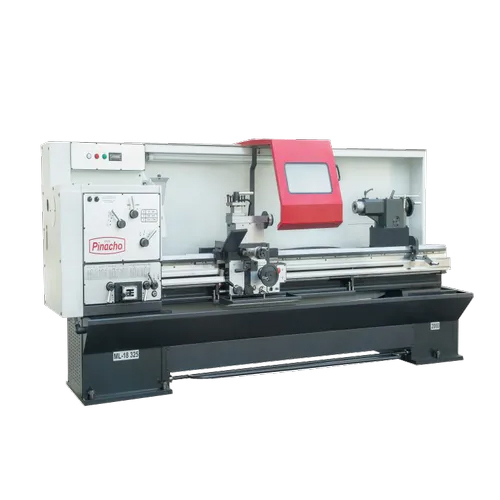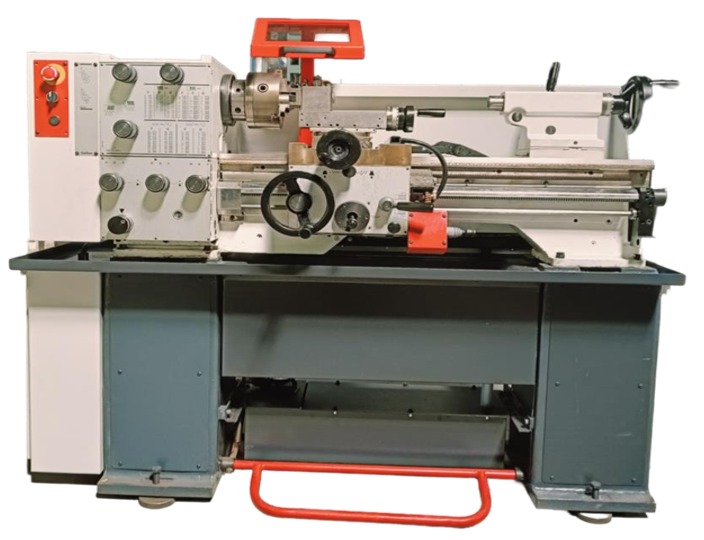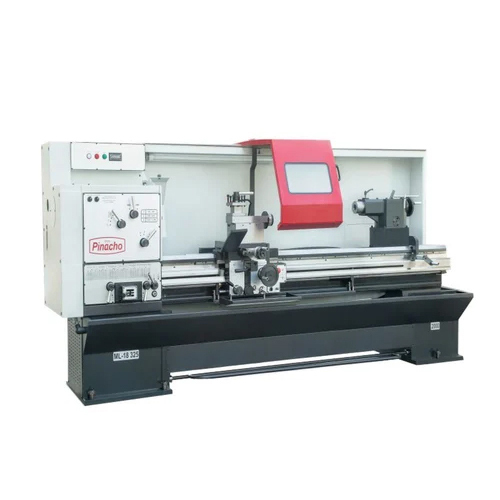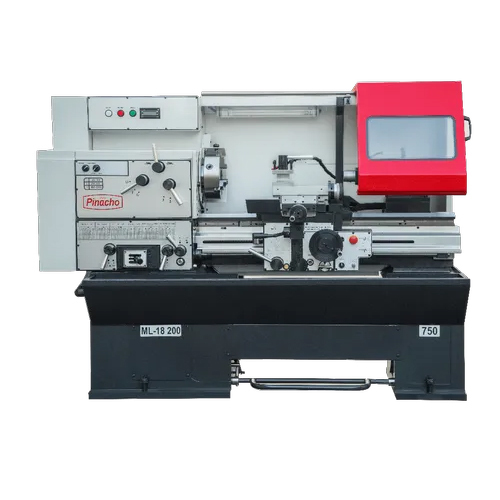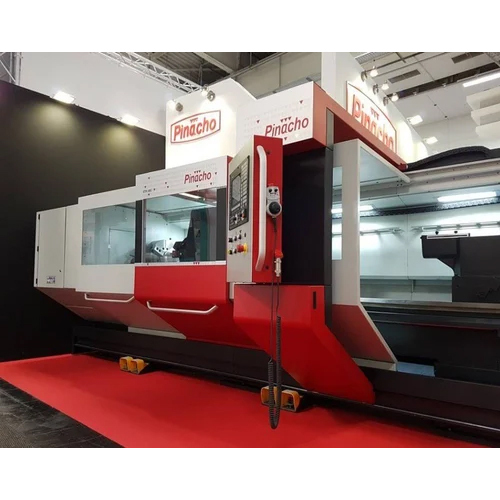
About Conventional Lathe Machine
Swing Over Bed652 mmPump Motor Power0.1 kWSwing Over Cross Slide450 mmLongitudinal Feeds0.044 - 1.324 mmMetric Threads0.5 - 15 mmTail Stock Morse Taper5 MTFollow Rest Capacity130 mmSwing Over Gap910 mmNo of Speed Range3Norton Box No of Pitch55Centre Height325 mmCentre Distance1500 mmModular Threads0.25 - 7.5 mmTail Stock Barrel Travel220 mmMaximum Tool Dimensions25 x 25 mmSpeed Range30 - 1700 rpmHeadstock Main Spindle Bore80 mmMain Spindle NoseA2 8 / Camlock 8Weight2100 KgBed Width350 mmSwing Over Carriage595 mmCross Slide Travel325 mmCross Feeds0.020 - 0.592 mmTool Post Slide Travel155 mmHeight1650 mmLength2900 mmWidth1100 mmGap Length In Front of Face Plate220 mmMain Spindle Morse Taper5 MTMain Motor Power7.5 kWWhitworth Threads60 - 2 T.P.IPitch Diametral Threads120 - 4 mmLead Screw Rod Pitch6 mmFixed Steady Capacity185 mm
FAQs of Conventional Lathe Machine:
Q: Is there a warranty for the Conventional Lathe Machine?
A: Yes, the Conventional Lathe Machine comes with a warranty.
Q: What type of control system does the machine use?
A: The machine is equipped with a Human Machine Interface (HMI) control system.
Q: Is the machine fully automatic?
A: Yes, the Conventional Lathe Machine operates with an automatic grade system.
Q: What material is used in the construction of the machine?
A: The machine is made from MS (Mild Steel).
Q: What is the voltage requirement for this machine?
A: The machine requires a voltage of 220/440 Volt (V).
Q: What is the weight of the Conventional Lathe Machine?
A: The machine weighs 2100 kilograms (kg).
Q: What is the key feature of the machine?
A: The Conventional Lathe Machine is known for its high efficiency.